
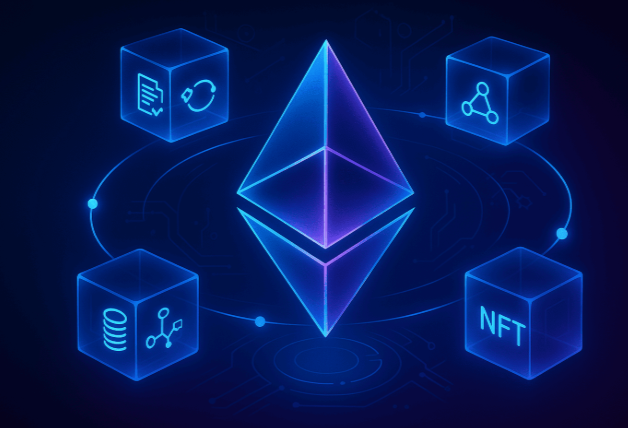

Ethereum provides a programmable value layer that formalizes token standards and verifiable state transitions. Smart contracts enable autonomous asset issuance, rights management, and lifecycle control, with modular components that developers can assemble. Composability links DeFi, NFTs, and adjacent use cases into continuous value flows. Security, upgrades, and governance shape ecosystem momentum. The result is a platform where innovation scales, yet the practical trade-offs and evolving standards invite careful consideration for those pursuing asset-centric strategies.
Why Ethereum Matters as a Digital Asset Platform
Ethereum stands as a foundational digital asset platform because it enables programmable value through smart contracts and decentralized applications. This framework supports blockchain consensus mechanisms that ensure trustless operation and verifiable state transitions. The ecosystem formalizes token standards, enabling interoperable assets and standardized issuance. This clarity fosters innovation while preserving autonomy, efficiency, and resilience across diverse financial and governance paradigms.
How Smart Contracts Drive Asset Innovation for Developers
Smart contracts extend the programmable value framework by enabling autonomous, verifiable asset creation, transfer, and governance within developer-focused ecosystems. They abstract complex workflows into verifiable code, lowering barriers to exchange, licensing, and compliance. This accelerates asset innovation by enabling modular, interoperable mechanisms for issuance, rights management, and lifecycle control, while preserving trust, auditable provenance, and freedom to experiment in open networks. Smart contracts drive asset innovation.
Leveraging Composability: DeFi, NFTs, and Other Use Cases
Leveraging composability, decentralized technologies enable modular ecosystems where DeFi, NFTs, and adjacent use cases interlock to create complex, edge-to-edge value flows. This dynamic fosters composability economies, where interoperable protocols assemble novel financial primitives and digital assets.
Cross chain interoperability expands liquidity and experimentation, empowering builders to deploy composable primitives across ecosystems, accelerating innovation while preserving autonomy and open participation.
Security, Upgrades, and Ecosystem Momentum: What to Watch
Security, upgrades, and ecosystem momentum present a triad of interdependent tensions shaping Ethereum’s trajectory: how protocol hardening and emergency response practices sustain resilience; how upgrade cadence and implementation risk influence capital and developer confidence; and how community alignment, governance signals, and external validation drive ongoing momentum across Layer 1–Layer 2 and related ecosystems.
security dynamics, upgrade implications.
See also: How Crypto Businesses Manage Regulatory Compliance
Conclusion
Ethereum stands as a living loom weaving digital assets into tangible forms. Its smart contracts are precision gears, turning ideas into auditable, interoperable tokens. Composability acts like a crowded highway of value, where DeFi, NFTs, and beyond trade lanes with minimal friction. Upgrades and governance steer the ship, smoothing storms of risk while preserving momentum. The result is an emergent ecosystem: a radiant lattice where programmable value cascades across industries, unlocking novel asset innovations with disciplined, interoperable clarity.